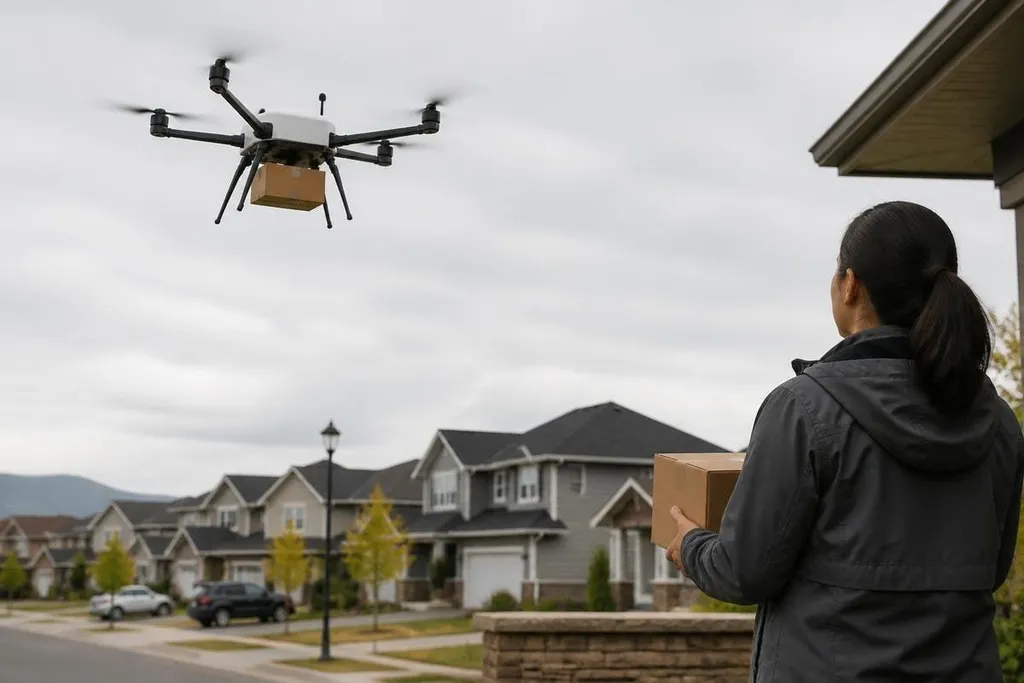
A delivery drone can lift off in a video and still fail the job that matters: carrying a parcel safely to the right person. The changes worth watching are the ones that make each flight repeatable, quiet, safe, and affordable.
The useful question for an operator is simple: what changes on the route, at the depot, or at the customer’s door?
- Safer routes: better obstacle sensing and clearer rules for shared airspace
- Better handoffs: reliable delivery without a worker standing below the drone
- Lower running costs: fewer battery swaps, failed flights, and manual checks
Better control in crowded airspace
A delivery drone needs more than a planned route. It must detect trees, wires, buildings, birds, and other aircraft while keeping enough battery for the return flight. A useful system will show how its sensors and flight software respond when the planned path changes.
The proof should come from repeated flights in places that resemble the target service area. A clear video of one smooth trip says little about how the drone handles blocked routes, poor visibility, or a lost connection.
Remote supervision is another area to watch. One operator may monitor several drones, but that only helps if the system tells them which flight needs attention and what action is safe. A control screen that leaves a person to inspect every route defeats the point of automation.
A drone can reach the address and still fail at the final handoff if the landing spot is blocked or nobody answers. The record needs the delivery site, package handoff, wait time, and operator action. Reports on Robot 24 can carry those details into the delivery step.
Delivery at the door
The handoff remains a hard part of the job. A drone can reach a location and still face a narrow yard, a balcony, power lines, pets, or a customer who is not there. The next useful step will be a delivery method that works across several common property layouts without adding a worker to every drop.
That method may involve a lowered package line, a marked landing area, or a secure box. The mechanism matters less than the test record: how often did the package reach the right spot, how long did the handoff take, and what happened when the space was blocked?
Noise also belongs in the test. A route over homes can meet its flight rules and still cause complaints if the aircraft passes low and often. Operators should ask for sound readings, flight height, and the distance from homes rather than accept a general claim about quiet operation.
Batteries, weather, and maintenance
Battery life affects every part of a delivery service. Operators need enough charge for the outbound trip, the return, a safe landing, and any delay caused by traffic or weather. A published flight time without a payload and route length is hard to use.
Weather creates a similar gap. Wind, rain, cold, and heat can change lift, battery output, sensor readings, and the safe landing area. A drone meant for daily deliveries needs a clear operating range and a record of canceled flights, not a single test in calm weather.
Maintenance may decide the cost. A fleet needs inspections, propeller changes, battery checks, software updates, and a plan for damaged aircraft.
The useful design change may be a system that lets a technician replace a worn part at the depot instead of sending the whole drone away.
What proof should buyers ask for?
A buyer comparing delivery drone systems can use this short checklist before a trial:
- Route record: Ask for repeated flights with blocked paths and lost links.
- Payload test: Check the parcel weight, size, balance, and delivery distance used.
- Handoff results: Count correct drops, missed drops, and manual rescues.
- Weather limits: Record the wind, rain, temperature, and visibility allowed.
- Fleet workload: Find out how many aircraft one remote operator can watch.
- Service plan: Price battery changes, inspections, repairs, and spare parts.
I'd skip any system that shows only its best flight and leaves these figures out. The strongest claim is still unproven until an operator can repeat the service across real routes.
The next useful milestone is a public trial record with flight counts, failed deliveries, weather limits, and operating cost. Until companies publish that information, the biggest delivery drone advance remains a promising aircraft, not a proven delivery service.